Featured Cases
Reproductive Healthcare Rights
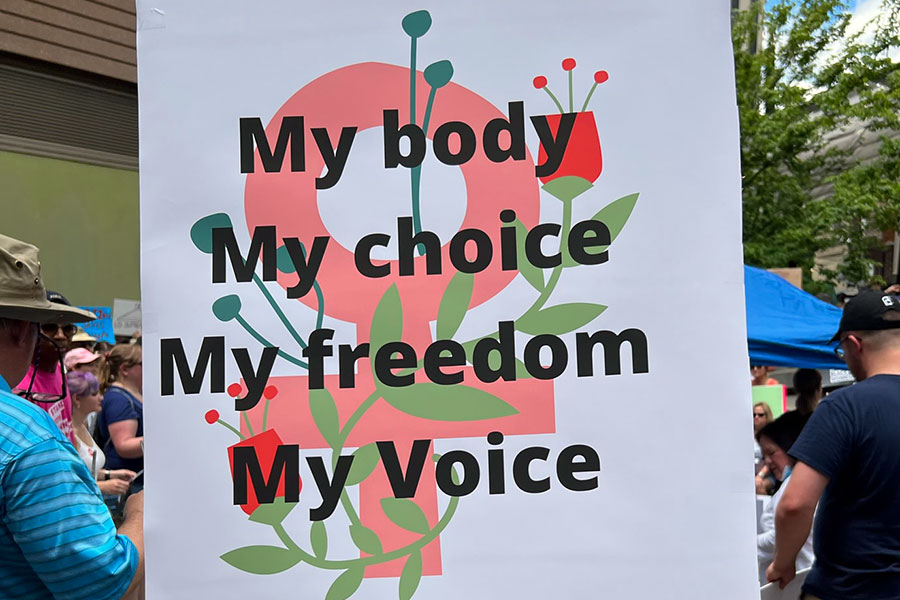
Health care should be safe and accessible for all people. That includes abortion. And that’s why Burnette Shutt & McDaniel has spent nearly a decade fighting to protect reproductive health care rights in South Carolina.
We’ve been a proud part of the legal team representing Planned Parenthood in various state and federal cases since 2018. We keep winning – and the state keeps coming at us again, in a monumental waste of state resources and tax dollars.
The Fight for Health-care Access in South Carolina
The case where Burnette Shutt & McDaniel first became involved is not an abortion case at all. It was a lawsuit filed by Planned Parenthood and a patient in response to a state order prohibiting Medicaid patients from seeking any care at facilities that also offer abortions. This order meant that low-income patients who relied on Planned Parenthood clinics for other gynecological services and health screenings could no longer do so.
A U.S. District judge ruled that, under federal law, Medicaid recipients can choose any qualified health-care provider they wish. The U.S. Court of Appeals agreed. The state, of course, appealed the case to the U.S. Supreme Court, which refused South Carolina’s request to block the funding while the appeal proceeds.
Recently, the Supreme Court heard arguments on the appeal itself, though it has not yet issued a ruling.
Media Coverage:
- https://www.scotusblog.com/2025/04/supreme-court-hears-dispute-over-south-carolinas-bid-to-defund-planned-parenthood/
- https://www.reuters.com/world/us/south-carolina-still-cannot-defund-planned-parenthood-us-court-rules-2024-03-05/
- https://www.reuters.com/legal/us-supreme-court-revives-south-carolina-planned-parenthood-defunding-case-2023-06-20/
Challenging the South Carolina Abortion Ban
Burnette Shutt & McDaniel has been part of the legal team fighting South Carolina’s near-total abortion ban since shortly after it became law in 2021. It’s a battle waged in both state and federal courts, and state courts again after Row v Wade was overturned at the federal level. The case currently is before the South Carolina Supreme Court again after the court reversed itself and allowed the ban mere months after ruling that a similar ban violated privacy rights.
And, despite that 2023 ruling, the state Supreme Court still has not clarified the ambiguity it created in upholding the ban. Our legal team was forced to file additional litigation asking for that clarification.
Though South Carolina and other states that have passed similar legislation like to promote the measures as “fetal heartbeat laws,” the legal definition of a “fetal heartbeat” is inaccurate.
In South Carolina, a “fetal heartbeat” is defined as “cardiac activity, or the steady and repetitive rhythmic contraction of the fetal heart, within the gestational sac.” This electrical cardiac activity is detectable on an ultrasound at around the sixth week of pregnancy – and many people aren’t even aware that they’re pregnant at that point.
The medical consensus, though, is that that definition is not medically accurate. The major components of what will become a heart do not form before nine weeks of pregnancy, and the embryo doesn’t become a fetus until much later.
These draconian laws and inaccurate definitions of a “fetal heartbeat” have an effect in South Carolina and elsewhere. Within a month of the South Carolina Supreme Court approving the ban, roughly 90 percent of patients seeking abortions in South Carolina were being turned away.
Headlines from other states tell us that abortion access is literally a matter of life and death for women. Two women in Texas died because doctors would not provide proper care after they had already miscarried. A woman in Georgia was arrested after miscarrying. States with extreme abortion bans are doing little to track cases where denied care has led to horrifying consequences, let alone do anything to stop those tragedies.
And that’s why we fight.
Media Coverage:
- https://apnews.com/article/abortion-heartbeat-definition-south-carolina-ban-a9f338f28dd2cd3db3f868822564db99
- https://www.thestate.com/news/politics-government/article231791733.html
- https://www.propublica.org/article/abortion-bans-deaths-state-maternal-mortality-committees
Links to third-party websites are not under the control of Burnette Shutt & McDaniel, PA, and our firm assumes no responsibility for the accuracy of the information contained on such websites.